
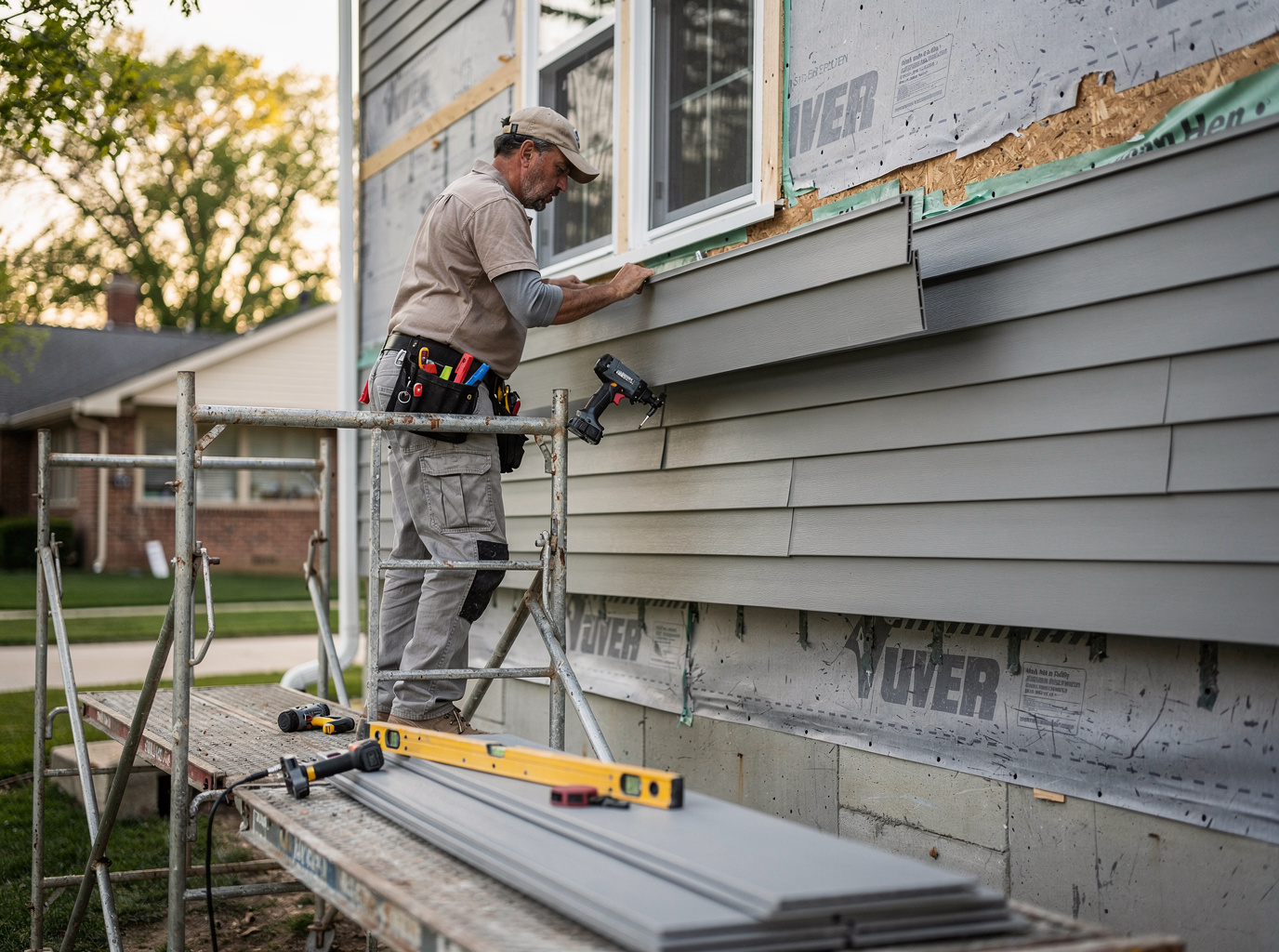
Fiber cement siding performs well in St. Louis humid continental climate where hot summers, cold winters, and frequent severe storms create constant moisture and wind pressure. Proper installation requires a continuous drainage plane behind the boards plus sealed joints at every transition, especially on two-story homes in neighborhoods like Shaw and Forest Park Southeast where original wood siding often fails at the foundation line. Older masonry walls common in Benton Park and Carondelet demand extra furring strips to create airflow and keep the new siding from trapping water against brick that already holds decades of moisture.
Homeowners in The Hill and Lafayette Square frequently request fiber cement because it resists hail and straight-line winds better than vinyl while maintaining the smooth or wood-grain texture that fits historic district guidelines. Installation crews must account for the city’s independent permitting rules and the tight setbacks on narrow lots in Soulard and Tower Grove South, which limit staging space and require precise panel sequencing to avoid cutting errors on gables and dormers. Skipping the manufacturer’s required clearance above grade or at rooflines leads to rot within a few freeze-thaw seasons.
Midwest Siding installs fiber cement on both full replacements and targeted sections where storm damage has occurred near Busch Stadium or the Delmar Loop. The material’s weight requires solid nailing into studs rather than sheathing alone, and crews routinely add extra fasteners in high-wind zones around the Gateway Arch corridor. Color-through boards reduce touch-up work after the frequent microbursts that hit University City and Webster Groves each spring.
Technician insight
In St. Louis, the thing that catches most people out with Fiber Cement Siding Installation is the combination of freeze-thaw cycles and high winds that drive water behind trim on pre-war brick homes in Benton Park and Carondelet. Skipping the ¼-inch clearance at grade or failing to fur out over masonry lets moisture sit against the wall for months, and the damage shows up the next spring.
Tower Grove South Two-Story Brick Home
Homeowner called after straight-line winds tore off vinyl siding on the north elevation. We found water behind the old sheathing at the second-floor windows. Installed new house wrap, furring, and fiber cement panels with sealed trim returns. Job finished before the next round of storms moved through.
Fiber Cement Siding Installation Services We Offer
✓Full Home Fiber Cement Siding Installation
Complete removal of old siding and new fiber cement installation on St. Louis homes, including moisture barrier, trim, and flashing details suited to local storm exposure.
✓Historic District Fiber Cement Siding
Board-and-batten or smooth fiber cement profiles installed on pre-1950 homes in Lafayette Square, Soulard, and Shaw while meeting city historic commission requirements.
✓Storm Damage Fiber Cement Replacement
Targeted panel and trim replacement after hail or wind events common along the Mississippi corridor and near Forest Park.
✓Fiber Cement Siding on Masonry Homes
Furred-out installation over brick or stone walls found throughout Benton Park, Carondelet, and The Hill to prevent trapped moisture.
✓Second-Story Fiber Cement Installation
Safe scaffolding and panel work on two- and three-story homes in Midtown and Downtown where access is limited by narrow alleys and sidewalks.
Fiber Cement Siding Installation Cost in St. Louis, MO
| Service | Typical Range | What Affects It |
|---|---|---|
| Full Home Fiber Cement Installation | $9,500–$18,000 | Depends on square footage and need for furring on brick homes in Soulard or Lafayette Square |
| Second-Story Only Installation | $4,200–$7,800 | Scaffolding and access add cost on narrow lots in Shaw and Tower Grove South |
| Storm-Damaged Section Replacement | $2,800–$5,400 | Panel count and matching existing profiles in neighborhoods near Forest Park |
Ranges are typical for St. Louis, MO and confirmed with an exact written quote before any work starts.
How it works
- 1
On-Site Assessment
Measure the home, note existing sheathing condition, and check for water intrusion at windows and rooflines typical in older St. Louis stock.
- 2
Moisture Barrier and Furring
Install house wrap and furring strips to create a drainage plane, especially critical on masonry walls in neighborhoods like Soulard.
- 3
Panel and Trim Installation
Hang fiber cement boards with proper fasteners and overlaps, then install pre-primed trim at corners, windows, and transitions.
- 4
Final Sealing and Cleanup
Caulk all joints, paint cut edges, and remove debris from the property before final walkthrough.
Pricing
Pricing varies by square footage, stories, and whether masonry furring is required on older St. Louis homes.