
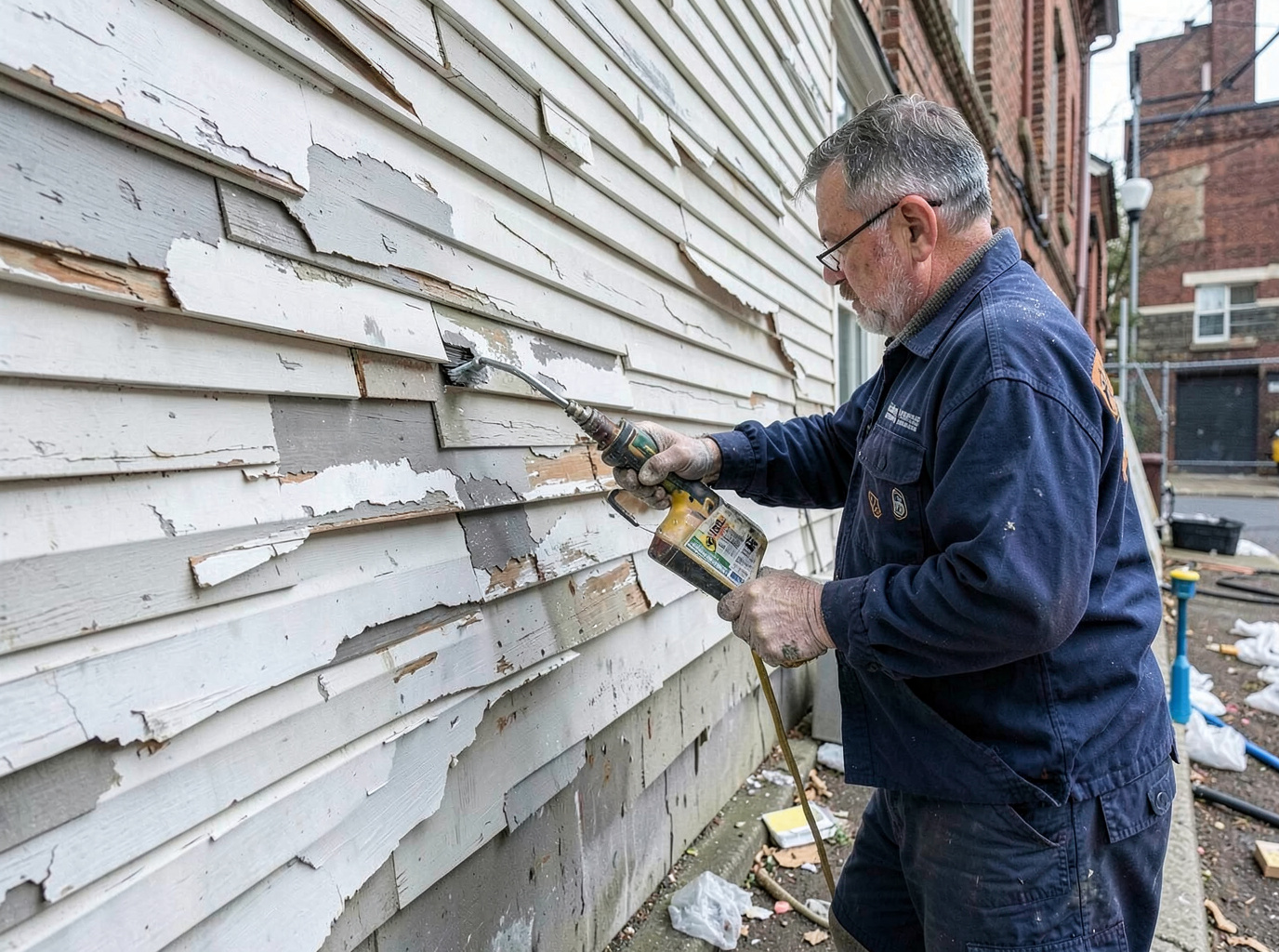
St. Louis sits in a humid continental climate where spring and summer storms routinely drop large hail across neighborhoods like Tower Grove South, Benton Park, and Forest Park Southeast. These impacts dent aluminum and crack vinyl on homes built before the 1960s, especially those with original wood sheathing that has softened over decades. Replacement crews must check for hidden water intrusion behind the siding because freeze-thaw cycles in winter push moisture deeper into the walls.
Many two-story brick and frame houses in Shaw and The Hill have narrow setbacks and shared lot lines that limit staging space for scaffolding and material drops. Crews often work from the alley side or coordinate with neighbors in Carondelet and Downtown to avoid blocking streets during removal. Matching the new siding profile to older courses requires pulling samples from multiple elevations because sun exposure and prior repairs have created slight color shifts across a single elevation.
Insurance adjusters in University City and Webster Groves frequently request line-item documentation of underlayment, flashing, and housewrap replacement. Skipping these steps leaves seams that leak during the next heavy rain, particularly on south-facing walls that take the brunt of summer storms rolling in from the Missouri River valley.
Technician insight
In St. Louis the thing that catches most people out with hail-damaged siding replacement is the hidden rot behind original wood sheathing on homes in Lafayette Square and Benton Park. Those narrow lots and shared walls mean you cannot just rip everything off without checking the neighbor side first, and spring storms hit again before the job is buttoned up.
Hail Strike on South-Facing Wall
A 1920s frame house in Shaw showed rows of dents after a May storm. Inspection found water stains along the bottom plates where older sheathing had absorbed moisture. Crews replaced only the damaged courses, renewed the flashing at each window, and added new housewrap behind the repair area. The south elevation now matches the untouched sides and has withstood the following winter freeze-thaw cycles without further intrusion.
Hail-Damaged Siding Replacement Services We Offer
✓Hail Impact Assessment
On-site evaluation of dented and cracked panels in St. Louis neighborhoods, documenting damage for insurance claims before any replacement begins.
✓Vinyl Siding Replacement
Full removal and reinstallation of hail-damaged vinyl using profiles that match existing trim on older homes in Soulard and Lafayette Square.
✓Fiber Cement Siding Repair
Targeted replacement of cracked fiber cement boards on homes in The Hill and Shaw where hail has compromised the painted surface and substrate.
✓Aluminum Siding Restoration
Removal of dented aluminum panels and installation of new sections with proper expansion gaps to handle St. Louis temperature swings.
✓Flashing and Trim Replacement
Renewal of damaged window and door flashing plus corner trim that hail often strikes on two-story homes near Forest Park.
Hail-Damaged Siding Replacement Cost in St. Louis, MO
| Service | Typical Range | What Affects It |
|---|---|---|
| Hail Damage Assessment | Free | Includes written report for insurance in St. Louis city limits. |
| Vinyl Siding Panel Replacement | $6–$11 per sq ft | Price varies with profile match and two-story access in Shaw or Soulard. |
| Fiber Cement Section Replacement | $9–$14 per sq ft | Higher when original texture must be recreated on older homes in The Hill. |
| Flashing And Trim Refresh | $450–$850 | Covers windows and corners on a typical two-story elevation. |
Ranges are typical for St. Louis, MO and confirmed with an exact written quote before any work starts.
How it works
- 1
Storm Damage Walkthrough
Technician inspects all elevations from the ground and roof edge, noting hail dents in Central West End and Delmar Loop homes while checking for water stains inside attic spaces.
- 2
Material And Color Match
Samples are taken from multiple walls to match new siding to faded sections caused by decades of Missouri sun and storms.
- 3
Selective Removal
Damaged panels are cut out without disturbing sound siding, protecting original wood sheathing common in pre-war Benton Park and Carondelet houses.
- 4
Underlayment And Installation
New housewrap and flashing are installed before siding goes up, with extra attention to south and west walls that face prevailing storm winds.
Pricing
Upfront written quotes provided during business hours.