
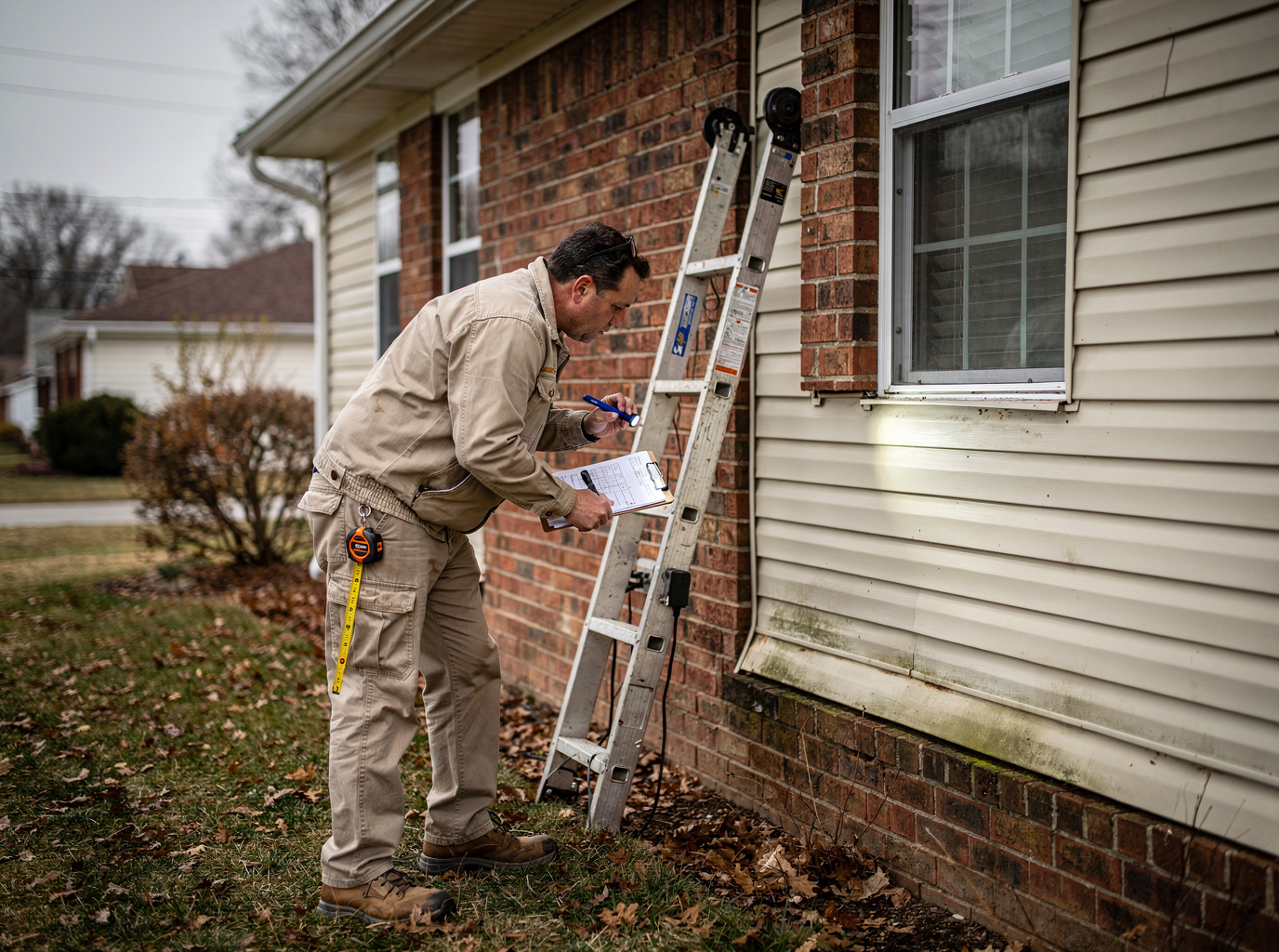
St. Louis homes in neighborhoods like Soulard, Lafayette Square and Benton Park often date to the late 1800s and early 1900s with original wood siding or early aluminum overlays that have endured decades of humid continental weather. Frequent severe storms bring high winds and hail that crack or loosen panels, while cold winters cause contraction that opens seams around windows and corners. An inspection must check fastener integrity, caulk lines and underlayment condition because these older structures sit on uneven lots where water pools against foundations during heavy rains.
In areas such as Tower Grove South, Shaw and Forest Park Southeast, many houses feature mixed siding materials from successive renovations, which creates transition points prone to leaks. Hot summers accelerate fading and warping on south-facing walls, while the independent city’s freeze-thaw cycles push moisture behind vinyl and fiber cement. Inspectors look for soft spots, nail pops and ventilation gaps that allow attic heat to affect siding performance, especially near the Missouri Botanical Garden and Tower Grove Park where mature trees drop debris that traps moisture.
Downtown, Midtown and Carondelet properties face additional challenges from urban runoff and proximity to the Mississippi, increasing humidity exposure on lower courses. Inspections here include checking for corrosion on metal trim and confirming that replacement panels will meet current wind-load expectations after severe weather events. Homeowners in nearby Clayton, University City, Webster Groves and Kirkwood also request these checks before committing to full siding replacement projects.
Technician insight
In St. Louis the thing that catches most people out with siding inspection is how quickly water gets behind the original wood on 1890s–1920s homes in Soulard and The Hill once the paint film fails; the frequent severe storms push rain sideways under those layers and the freeze-thaw cycles finish the job before owners notice anything from the street.
Hidden Rot Behind Vinyl in Tower Grove South
A homeowner noticed soft spots near the foundation after heavy spring storms. Inspection revealed failed flashing on a 1920s frame house where water had wicked up behind the vinyl for years. We removed two courses, dried the sheathing and recommended targeted replacement instead of full re-siding.
Siding Inspection Services We Offer
✓Storm Damage Assessment
Detailed review of hail dents, wind-lifted panels and debris impact on siding in St. Louis neighborhoods after severe weather.
✓Moisture Intrusion Inspection
Checks for water behind siding caused by poor flashing, failed caulk and foundation pooling common in older Central West End and Soulard homes.
✓Insulation and Underlayment Check
Evaluates whether existing insulation remains dry and effective after decades of freeze-thaw cycles in The Hill and Benton Park houses.
✓Fastener and Seam Evaluation
Identifies loose nails, popped screws and open joints that allow winter air infiltration in properties near Forest Park and the Delmar Loop.
✓Material Compatibility Review
Assesses mixed siding types on renovated homes in Shaw and Lafayette Square to prevent future expansion or corrosion issues.
Siding Inspection Cost in St. Louis, MO
| Service | Typical Range | What Affects It |
|---|---|---|
| Standard Siding Inspection | $175–$325 | Single-family homes under 2,500 sq ft in St. Louis city limits |
| Detailed Moisture Mapping | $250–$450 | Includes extra readings on older stock in Soulard or Benton Park |
| Post-Storm Assessment | $200–$375 | Triggered after severe weather events common in the region |
| Multi-Unit Or Complex Access | $300–$550 | Downtown or Midtown buildings with ladders or scaffolding needs |
Ranges are typical for St. Louis, MO and confirmed with an exact written quote before any work starts.
How it works
- 1
Schedule And Site Walk
Book during business hours and meet at the property to note visible concerns from the street and yard.
- 2
Exterior Surface Examination
Inspect every elevation for cracks, warping, missing pieces and staining caused by local weather patterns.
- 3
Probe And Moisture Readings
Use tools to test soft areas and measure moisture levels behind siding at key transition points.
- 4
Report And Recommendations
Deliver written findings with photos and prioritized next steps for repair or replacement.
Pricing
Most inspections completed during Mon–Fri 8am–6pm or Sat 9am–2pm hours; final cost depends on home size and access.