
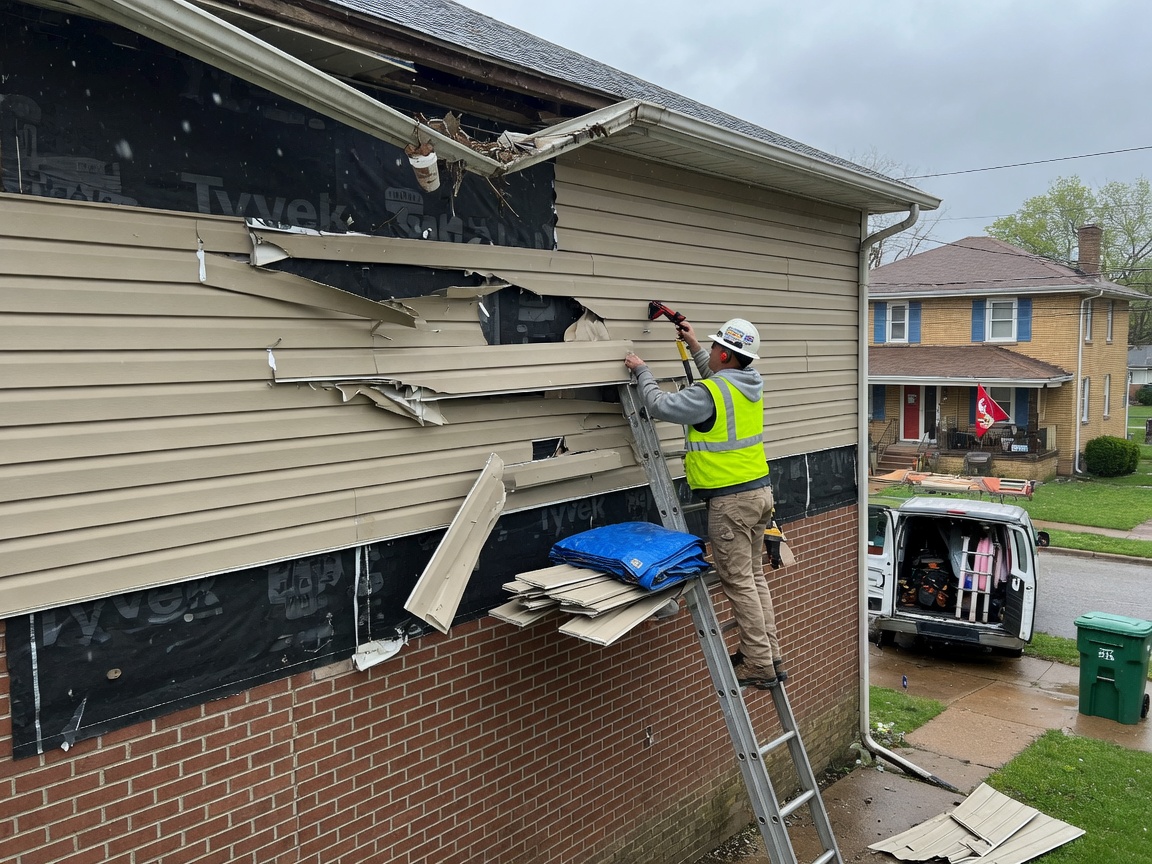
St. Louis sits in a humid continental climate where severe thunderstorms, straight-line winds and occasional hail arrive most summers. These events tear at vinyl, aluminum and wood siding on the city’s pre-1940 frame houses common in neighborhoods such as Benton Park, Shaw and Forest Park Southeast. Water driven behind panels quickly reaches the sheathing because many homes lack modern housewrap, so a visible dent often signals larger rot that must be opened and dried before any new siding can be fastened.
Repair crews match the original profile and color by pulling stock from local suppliers rather than ordering full truckloads. In the Independent City, permits are required once more than one wall is opened; inspectors check for proper flashing at windows and doors, especially on the north-facing walls that take the brunt of winter winds. Crews also watch for lead paint on homes built before 1978 and use containment methods required inside city limits.
After a storm, homeowners in Clayton, University City and Webster Groves often discover that insurance adjusters undervalue hidden moisture. Midwest Siding documents saturated insulation and rotted sheathing with dated photos so the scope stays accurate. Repairs are scheduled between late spring and early fall when temperatures stay above 50 degrees, the range needed for proper caulk and sealant adhesion on older wood trim.
Technician insight
In St. Louis the thing that catches most people out with Storm-Damaged Siding Repair is how the frequent severe storms push water behind intact-looking vinyl on 1920s balloon-frame houses in Benton Park and Carondelet; once the paper backing fails, rot travels two studs over before any exterior sign appears.
Tower Grove South Two-Story After July Derecho
Wind lifted the east gable vinyl on a 1930s home, allowing rain to soak the sheathing. We opened the wall, found two feet of wet insulation and rotted bottom plate, replaced the sheathing and added new housewrap before reinstalling matching panels. Homeowner’s insurance covered the extra work once photos showed the hidden damage.
Storm-Damaged Siding Repair Services We Offer
✓Hail Impact Panel Replacement
Remove and replace dented vinyl or aluminum panels on homes in The Hill and Carondelet where hail has cracked the finish and allowed water entry.
✓Wind Uplift and Fastener Repair
Re-secure or replace siding lifted by straight-line winds common along the Mississippi corridor, adding extra fasteners at gable ends in Soulard and Lafayette Square.
✓Water Intrusion Drying and Sheathing Repair
Open affected walls, remove wet insulation, dry framing and install new sheathing before new siding goes on older Central West End and Shaw homes.
✓Wood Siding Board Replacement
Cut out rotted clapboards and install matching cedar or fiber-cement boards on pre-war homes in Benton Park and Midtown after heavy rain events.
✓Flashing and Trim Restoration
Replace damaged window and door flashing plus corner trim that storm winds loosened on two-story homes in Tower Grove South and Forest Park Southeast.
Storm-Damaged Siding Repair Cost in St. Louis, MO
| Service | Typical Range | What Affects It |
|---|---|---|
| Single-wall panel replacement | $450–$950 | Vinyl or aluminum; rises with two-story access in neighborhoods like Shaw |
| Wood board replacement per wall | $800–$1,600 | Includes new flashing and paint-grade trim on pre-1940 homes |
| Hidden moisture remediation add-on | $300–$700 | Drying equipment and sheathing replacement when rot is discovered |
| Full insurance documentation package | $150 | Photos, scope and material list for claims on Central West End or Soulard properties |
Ranges are typical for St. Louis, MO and confirmed with an exact written quote before any work starts.
How it works
- 1
On-Site Damage Walk
Technician inspects every elevation, photographs dents, lifted edges and soft spots, and notes which walls face prevailing storm tracks.
- 2
Moisture And Substrate Check
Probe behind siding for hidden water, test sheathing integrity and mark areas that need drying or replacement before new material is ordered.
- 3
Material Match And Permit Pull
Source matching profiles from St. Louis suppliers, confirm color lots and pull any required city permit for multi-wall repairs.
- 4
Repair And Weatherproofing
Remove damaged sections, install new sheathing where needed, add housewrap patches, then fasten replacement siding with upgraded wind-rated nails.
- 5
Final Walk And Documentation
Review finished elevations with homeowner, supply photos for insurance and schedule follow-up visit after the next heavy rain.
Pricing
Cost depends on storm extent, siding type, and whether hidden rot is found behind panels.