
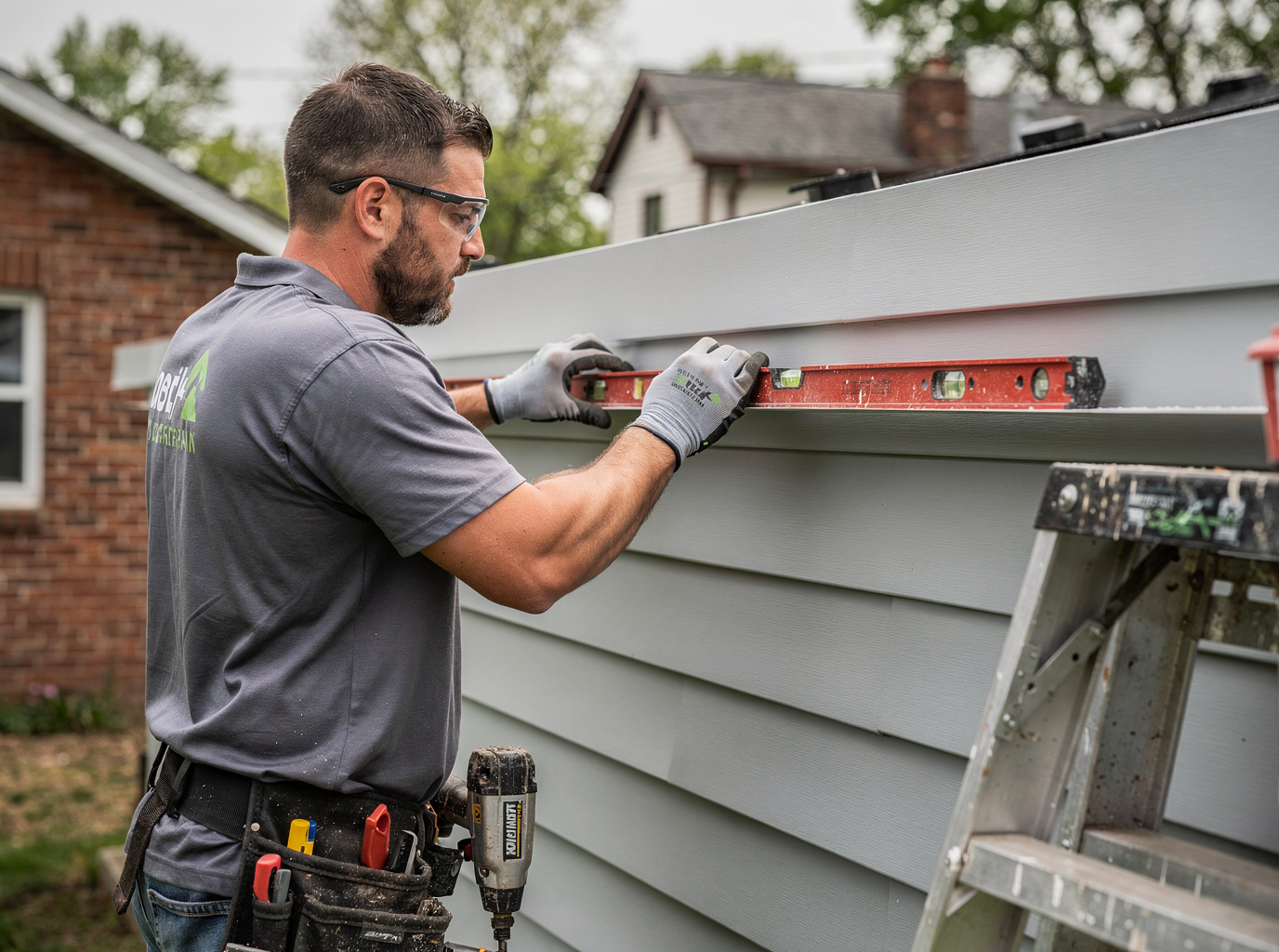
St. Louis homes in neighborhoods like Soulard, Lafayette Square and Benton Park often date to the late 1800s or early 1900s with original wood or brick exteriors that need careful preparation before new vinyl goes up. Frequent severe storms and wide temperature swings demand proper house wrap, flashing around windows, and expansion gaps so panels do not buckle during summer heat or crack in winter freezes. Crews working in the Independent City must also account for narrow lots and limited access common on streets near the Gateway Arch and Forest Park.
Vinyl performs well against the region’s humidity and wind-driven rain when installed with manufacturer-specified fasteners and starter strips that sit above grade to avoid moisture wicking from St. Louis soil. In areas such as Tower Grove South and Shaw, where many two-story frame houses sit close together, scaffolding and debris containment become daily requirements. Proper ventilation behind the siding helps prevent the mold issues that appear after heavy rains common along the Mississippi River corridor.
Installation timing matters because vinyl must be handled above 40 degrees to avoid brittle breaks during cold snaps. Crews schedule around the hot, humid stretches that hit Delmar Loop and Midtown so panels can be cut and snapped without distortion. Homeowners in nearby Clayton, University City, Webster Groves and Kirkwood often request the same storm-rated profiles used inside the city to keep neighborhoods consistent.
Technician insight
In St. Louis the thing that catches most people out with Vinyl Siding Installation is skipping the expansion gaps on older frame homes in Soulard and Benton Park. Those houses move with the freeze-thaw cycles and severe storms, so panels installed tight in summer will buckle by the first cold snap.
Tower Grove South Two-Story
Homeowner called after straight-line winds tore panels from the west wall. We found rotted sheathing behind the original siding and missing flashing at the second-floor windows. Replaced the damaged sections with insulated vinyl, added proper step flashing, and restored the original color match.
Vinyl Siding Installation Services We Offer
✓Full Home Vinyl Siding Installation
Complete removal of old siding and new vinyl application on single-family homes in St. Louis neighborhoods including proper insulation, flashing and trim.
✓Vinyl Siding Replacement After Storm Damage
Targeted panel and trim replacement on homes hit by hail or high winds common in the region, matched to existing profiles in areas like Carondelet and Forest Park Southeast.
✓Vinyl Siding for Historic District Homes
Approved profiles and color selections that meet guidelines in Soulard and Lafayette Square while adding modern weather protection.
✓Insulated Vinyl Siding Installation
Foam-backed panels installed on older frame houses in The Hill and Shaw to improve energy performance during cold winters.
✓Multi-Story Vinyl Siding Installation
Safe scaffolding and access work on two- and three-story homes near Downtown and Midtown where tight lots limit equipment placement.
Vinyl Siding Installation Cost in St. Louis, MO
| Service | Typical Range | What Affects It |
|---|---|---|
| Basic Vinyl Siding Installation | $7–$11 per sq ft | Standard profiles on single-story homes in flat neighborhoods |
| Insulated Vinyl Siding Installation | $9–$14 per sq ft | Foam-backed panels on two-story homes |
| Storm Damage Panel Replacement | $1,800–$4,500 | Partial replacement after severe weather events |
| Historic District Vinyl Work | $8–$13 per sq ft | Approved profiles and extra trim detailing |
Ranges are typical for St. Louis, MO and confirmed with an exact written quote before any work starts.
How it works
- 1
Site Assessment
Measure the home, note existing conditions and check for rot or water intrusion common in St. Louis brick and frame houses.
- 2
Preparation and Removal
Remove old siding, install new house wrap and flashing around windows and doors while protecting landscaping on narrow city lots.
- 3
Panel Installation
Hang starter strips, corners and panels with correct expansion gaps to handle temperature swings between summer heat and winter cold.
- 4
Trim and Final Inspection
Install J-channel, window trim and caulk penetrations, then walk the job with the homeowner before cleanup.
Pricing
Upfront quotes provided after on-site assessment; final price depends on home size, stories and access.